

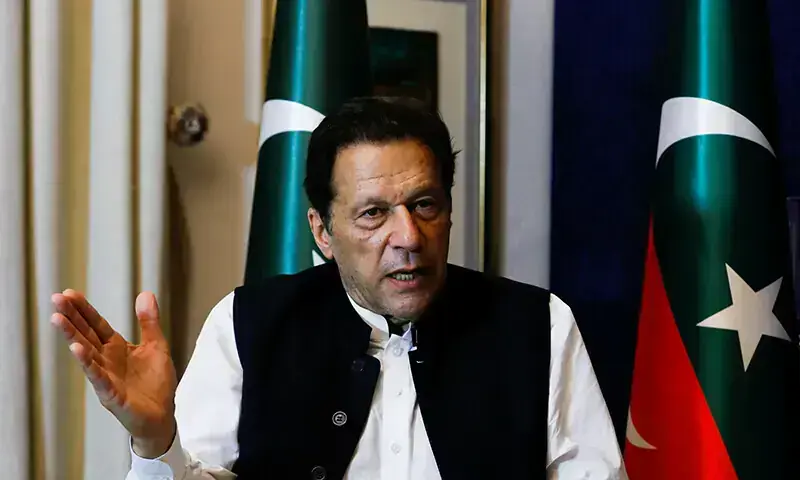
Global Cricket Legends Including Gavaskar and Kapil Dev Demand Proper Medical Care
Quick Answer: Fourteen legendary cricket captains from five nations—including India’s Sunil Gavaskar and Kapil Dev—issued a humanitarian appeal on February 17, 2026, urging Pakistan’s government to provide immediate medical care and dignified treatment to jailed former Prime Minister Imran Khan, who has reportedly lost 85% vision in his right eye.
In an extraordinary display of cross-border solidarity, former cricket captains including India’s Gavaskar and Kapil delivered a letter to Prime Minister Shehbaz Sharif expressing “profound concern” over the deteriorating health of Pakistan’s 1992 World Cup-winning captain, who has been imprisoned in Rawalpindi’s Adiala Jail for over 32 months.
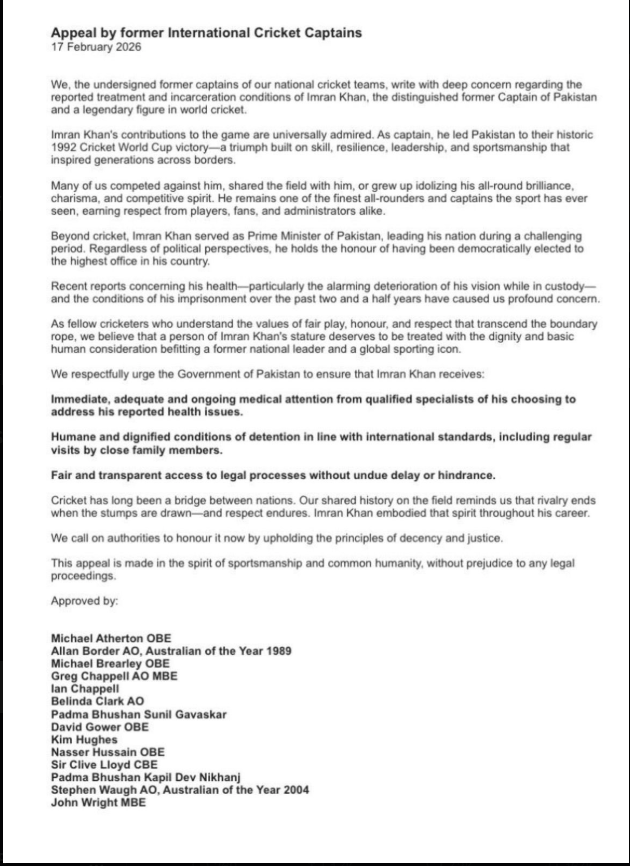
Who Signed the Humanitarian Appeal?
The petition, drafted by former Australian captain Greg Chappell, bears signatures from cricket’s most respected leaders across five Test-playing nations:
India (2): Sunil Gavaskar, Kapil Dev
Australia (6): Greg Chappell, Ian Chappell, Allan Border, Steve Waugh, Kim Hughes, Belinda Clark
England (4): Michael Atherton, Nasser Hussain, Michael Brearley, David Gower
West Indies (1): Sir Clive Lloyd
New Zealand (1): John Wright
Former Sri Lankan captain Arjuna Ranatunga has also expressed interest in adding his name to the appeal, according to The Tribune.
What Are They Demanding?
The letter makes three specific humanitarian demands:
- Immediate Medical Attention: Qualified specialists of Khan’s choosing must address his reported health issues, particularly the alarming 85% vision loss in his right eye
- Dignified Detention Conditions: Humane treatment meeting international standards, including regular family visits
- Fair Legal Access: Transparent access to legal processes without undue delay or hindrance
“The captains emphasized: “Recent reports concerning his health particularly the alarming deterioration of his vision while in custody and the conditions of his imprisonment over the past two and a half years have caused us profound concern.”
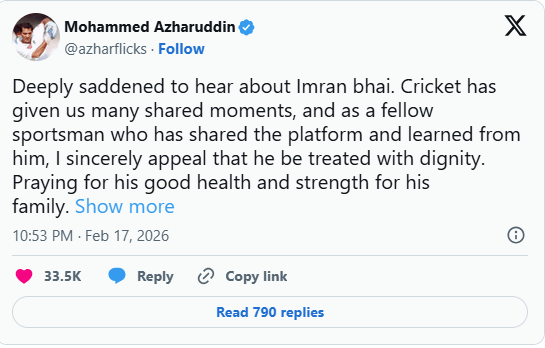
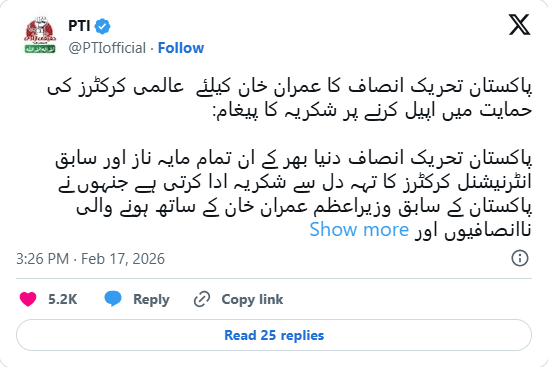
Why Is This Appeal Significant?
Cricket as a Bridge Between Nations: The petition represents unprecedented unity among cricket legends who competed fiercely against each other during their playing days. As the letter states: “Cricket has long been a bridge between nations. Our shared history on the field reminds us that rivalry ends when the stumps are drawn, and respect endures.”
Sunil Gavaskar’s Personal Response: In an exclusive interview with The Tribune, Gavaskar revealed that Greg Chappell messaged him asking if he could join the appeal after reports emerged about Khan’s vision loss. “It’s a heartfelt request to the authorities there to give him proper medical care,” Gavaskar said, immediately agreeing to sign.
Setting Aside Political Rivalries: The inclusion of Indian captains Gavaskar and Kapil Dev carries immense weight given the fraught India-Pakistan political relationship. Their participation demonstrates that humanitarian concerns transcend national borders and sporting rivalries.
What Is Imran Khan’s Medical Condition?
According to Barrister Salman Safdar’s February 10 report submitted to Pakistan’s Supreme Court, Imran Khan has lost approximately 85% of vision in his right eye while imprisoned. The report details:
- Persistent blurred vision and retinal issues
- Allegations of medical neglect by jail authorities
- Vision problems allegedly ignored for months
- Need for specialized ophthalmological treatment
A medical board constituted by the Supreme Court subsequently claimed Khan’s condition is improving, though rumors persist that he has been secretly moved to a hospital. Authorities confirmed Khan underwent a 20-minute medical procedure at Pakistan Institute of Medical Sciences in January but provided no additional details.
Political Context and Bangladesh Solidarity
Pakistan initially framed its boycott as principled solidarity with Bangladesh. Bangladesh faced exclusion after its government refused to allow the team to play in India.
The ICC Board voted 14–2 to replace Bangladesh with Scotland. The board chose this option instead of rescheduling matches in Sri Lanka. Only Pakistan and Bangladesh voted against the decision.
Prime Minister Shehbaz Sharif stated:
“We have taken a very clear stand on the T20 World Cup. We will not play the match against India because there should be no politics on the sports field.” We should completely stand by Bangladesh, and I think this is a very appropriate decision.”
However, the reversal suggests that cricket’s commercial realities and Pakistan’s own tournament interests ultimately outweighed political solidarity considerations. The decision also reflects recognition that Bangladesh’s exclusion created a precedent Pakistan didn’t want applied to itself in future tournaments.
Who organized the humanitarian appeal for Imran Khan?
Former Australian captain Greg Chappell drafted the petition and coordinated signatures from 13 other legendary captains across five nations, making it one of cricket’s most unified humanitarian interventions.
What health issues is Imran Khan facing in prison?
Khan has reportedly lost 85% vision in his right eye, with persistent blurred vision and retinal problems. His lawyer submitted detailed medical concerns to Pakistan’s Supreme Court on February 10, 2026.
Has Pakistan’s government responded to the appeal?
Prime Minister Shehbaz Sharif’s office told AFP it had not yet received the captains’ statement as of February 17. The Supreme Court has requested a report on Khan’s living conditions in Adiala Jail.
Why are Indian cricket legends supporting a Pakistani politician?
The appeal transcends politics, focusing on humanitarian treatment of a sporting icon. Gavaskar and Kapil Dev emphasized their respect for Khan’s cricket legacy and basic human dignity regardless of political circumstances.
What are Imran Khan’s legal charges?
Khan was sentenced to 17 years for corruption charges (which he denies), plus additional sentences totaling 10 and 14 years in separate cases. He was also sentenced to 7 years for marrying without waiting an appropriate period after his wife’s divorce—a sentence later overturned.
Could this appeal change Khan’s situation?
While the appeal carries moral weight, it has no legal force. However, international attention may pressure Pakistani authorities to ensure proper medical care and transparent treatment, especially given Supreme Court monitoring.