

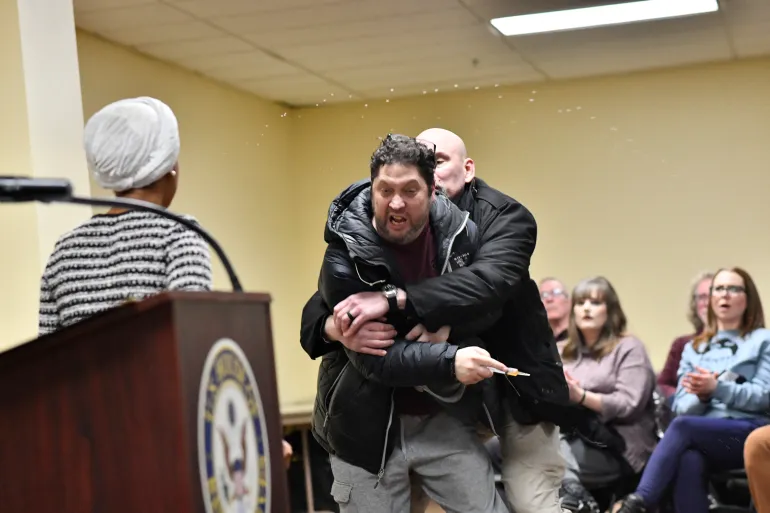
On January 27, 2026, U.S. Representative Ilhan Omar was sprayed with an unknown liquid during a town hall meeting in Minneapolis, Minnesota — a disturbing event that sparked new debate about political violence and security for elected officials.
The incident occurred as Omar was discussing controversial immigration policy issues, including her call to abolish U.S. Immigration and Customs Enforcement (ICE) and her criticism of Kristi Noem, who was in office overseeing federal enforcement efforts. Minutes into her remarks, a man in the audience approached the stage and used what police described as a syringe to spray a strong-smelling liquid toward her.
Law enforcement quickly tackled the suspect, later identified as Anthony Kazmierczak, 55, and booked him on third-degree assault charges. Preliminary reports described a vinegars-like odor from the substance, and forensic scientists responded at the scene. Omar was not seriously injured and continued her remarks, underscoring her resilience in the face of the disruption.
Why This Matters
While isolated attacks on lawmakers are rare, this incident may signal broader trends:
Media treatment of politically charged events can influence public perception, sometimes amplifying fear or framing the narrative before all facts are available.
Increased threats against public officials: Security experts note a rise in cases where elected representatives face intimidation or violence at public events, especially as political polarization intensifies.
The safety vs. free speech debate: Balancing accessibility for constituents with adequate protections for lawmakers is becoming a central concern in American civic life.
Political and Community Reactions
Following the incident, leaders from both parties condemned the attack. Minneapolis Mayor Jacob Frey called the incident “unacceptable,” emphasizing that disagreements should never manifest as physical danger. Meanwhile, supporters of Omar highlighted her courage in continuing the event despite a potentially threatening situation.
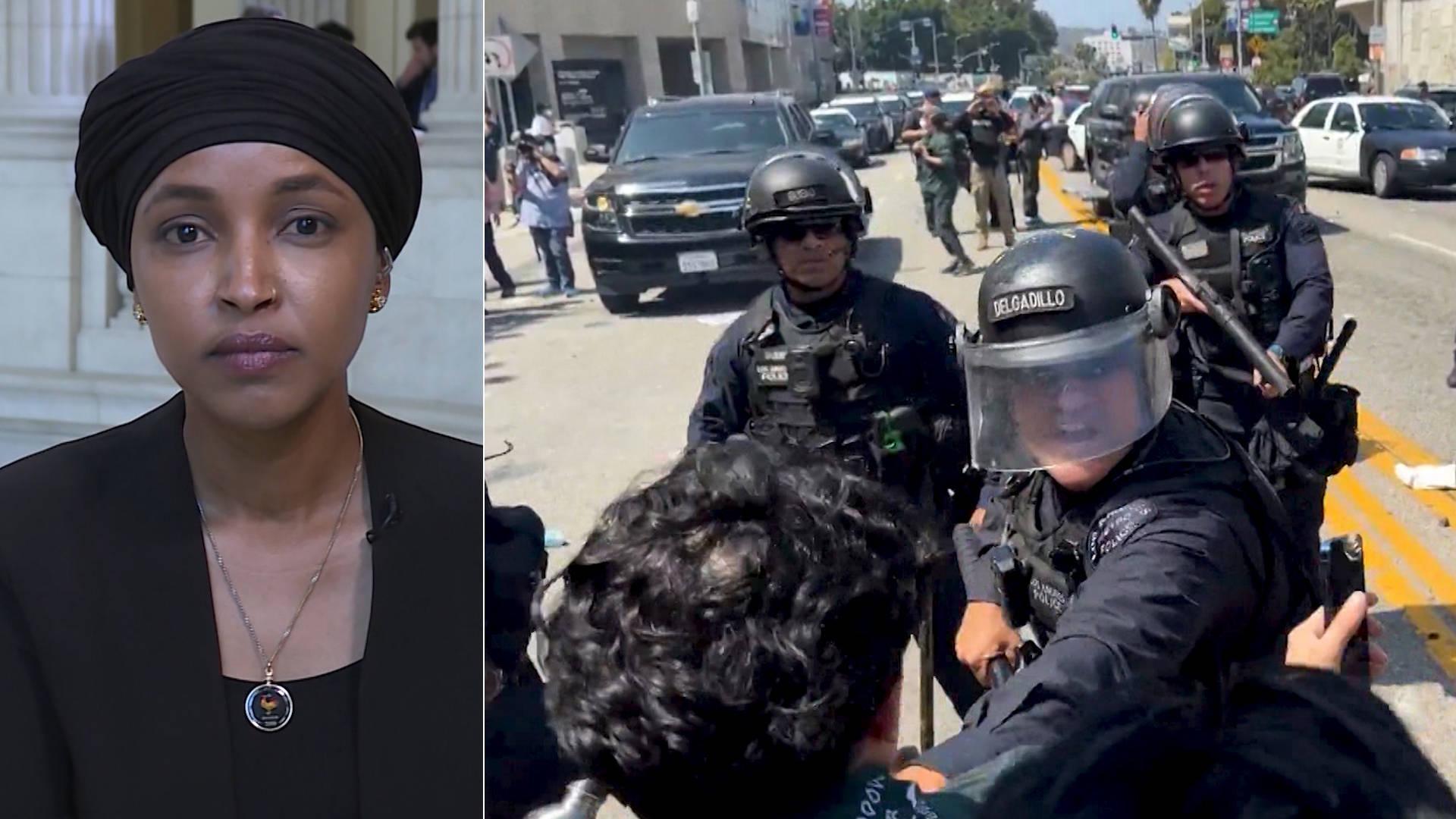
“Some observers noted the attack occurred amid a politically charged environment in Minnesota, where tensions over immigration enforcement have ignited protests and public debate.”
Security Implications for Future Events
The attack raises important questions for how public forums are run:
- Should lawmakers use enhanced screening and security at town halls?
- How should law enforcement prepare for unpredictable disruptions without stifling civic engagement?
- What measures can protect both officials and democratic dialogue?
These questions will likely shape future discussions as debates over policy and public safety evolve.
Who is Anthony Kazmierczak and why did he attack Omar?
Anthony Kazmierczak, 55, was arrested and charged with third-degree assault. During the attack, he appeared to yell “you must resign” at Omar. His motives remain under investigation, and it’s unclear if he has legal representation. The U.S. Capitol Police are working to pursue the most serious charges possible.
Has Ilhan Omar faced threats before this attack?
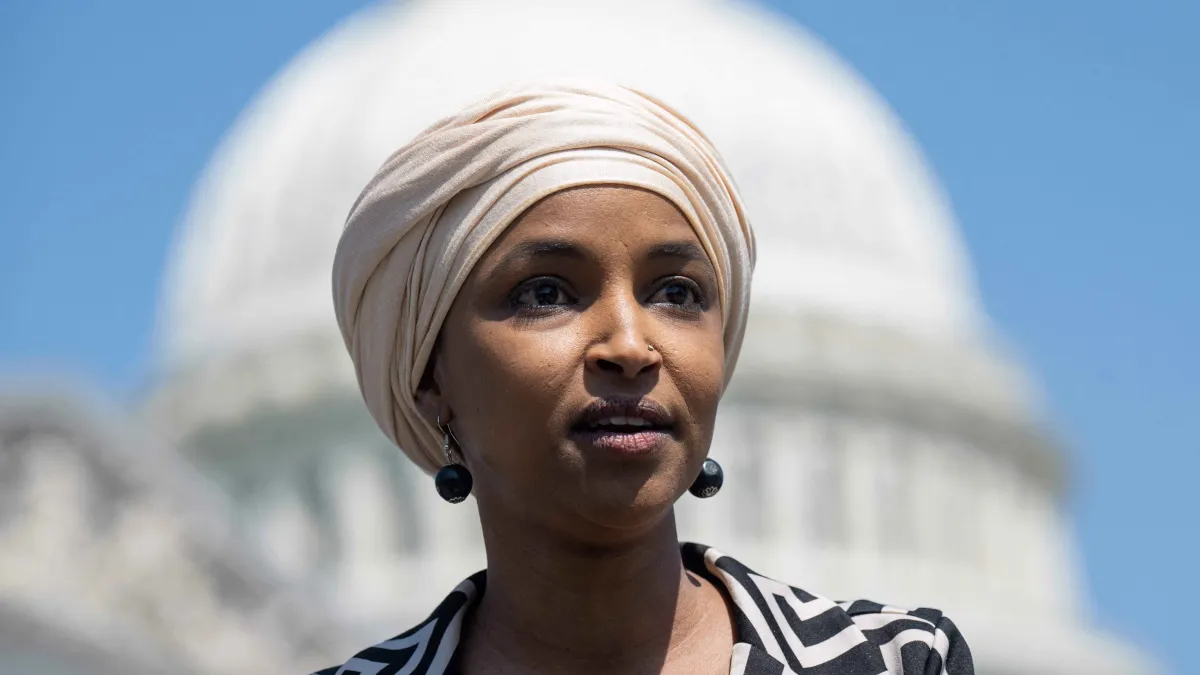
Yes, Omar has frequently spoken about receiving death threats, many containing racist or Islamophobic language. She’s one of the first two Muslim women elected to Congress and a Somali American refugee. The Capitol Police investigated 14,938 threats against lawmakers in 2025, up from 9,474 in 2024.
Omar’s Legislative Focus
The town hall was intended to update constituents on efforts to hold ICE accountable for what Omar characterized as “unlawful terrorization of Minnesota communities.” She has been particularly vocal about Operation Metro Surge, a massive ICE crackdown launched in December targeting undocumented immigrants in Minneapolis.
Just before the attack, Omar stated: “ICE cannot be reformed. It cannot be rehabilitated; we must abolish ICE for good. And DHS Secretary Kristi Noem must resign or face impeachment.” This advocacy for ICE abolition has made her a lightning rod for conservative criticism, particularly as the Trump administration expands immigration enforcement operations.
Omar represents Minnesota’s 5th Congressional District, which covers Minneapolis and surrounding areas. Her district includes significant immigrant communities, making immigration policy a priority issue for many constituents. She has consistently advocated for progressive immigration reform, refugee rights, and protection for immigrant communities.
