

In early 2026, as US and Israeli forces launched military strikes against Iran, the world looked to global superpowers to broker a peace deal. What nobody expected was that Pakistan — a country long labelled economically fragile and diplomatically sidelined — would emerge as the most critical mediator on the world stage.
From delivering secret proposals between Washington and Tehran, to hosting 21-hour face-to-face negotiations in Islamabad, Pakistan has stepped into a role that has surprised analysts, diplomats, and world leaders alike. Here is everything you need to know about how it happened, what was discussed, and what comes next.
Background: The 2026 Iran-US Conflict
The crisis began on February 28, 2026, when the United States launched “Operation Epic Fury” — a combined air and naval campaign against Iran. The stated objectives from Washington included:
- Destroying Iran’s ballistic missile capabilities
- Dismantling Iran’s nuclear program
- Reopening the Strait of Hormuz, which Iran had blockaded
- Cutting Iran’s support for regional armed groups
The conflict immediately shook global oil markets, disrupted shipping through one of the world’s most critical waterways, and triggered a humanitarian crisis in Lebanon as Israeli strikes continued against Hezbollah.
With the situation threatening to spiral into a broader regional war, both sides needed an exit — but neither was willing to approach the other directly. That created an opening for Pakistan.
Why Pakistan? The Unlikely Mediator
Pakistan’s emergence as a mediator surprised many. For years, analysts had described it as a “pariah state” — economically dependent on IMF bailouts, internally divided, and with a complicated relationship with both the West and the Muslim world.
But several unique factors made Pakistan the right country at the right moment:
1. Trusted by Both Sides
Pakistan had longstanding relationships with both the United States (as a historic security partner) and Iran (as a Muslim neighbour with strong people-to-people ties). Crucially, when the ceasefire was announced on April 8, 2026, both the US and Iran publicly named Pakistan’s PM Shehbaz Sharif and army chief Field Marshal Asim Munir by name in their announcements — a rare sign of mutual trust.
As Rasheed Wali Janjua, director of research at the Islamabad Policy Research Institute, noted: “No other country enjoyed the same kind of trust from both parties.”
2. Pakistan’s Defence Pact with Saudi Arabia
In September 2025, Pakistan signed a mutual defence pact with Saudi Arabia. This gave Islamabad deeper influence in Gulf politics at exactly the right moment, allowing it to coordinate with Riyadh, UAE, and Qatar — all of whom were pushing for a diplomatic solution.
3. A Pivot Away from Isolation
Pakistan had been actively seeking to rebuild its international standing. After years of being viewed as a supporter of the Taliban (which later turned adversarial), Islamabad was determined to demonstrate diplomatic value — and the Iran-US crisis gave it exactly that opportunity.
The Timeline: Pakistan’s Diplomatic Journey
February–March 2026: Early Proposals
As conflict began, Pakistan was already positioning itself. On March 25, Pakistani officials formally delivered a 15-point US proposal to Iran, covering nuclear limits, missile restrictions, Hormuz access, and sanctions relief. Iran rejected the proposal but the communication channel had been opened.
On March 31, Pakistan introduced its own “5-Point Peace Initiative”, calling for an immediate ceasefire and humanitarian access to conflict zones.
April 8, 2026: The Ceasefire Breakthrough
After six weeks of conflict and intense Pakistani shuttle diplomacy, PM Shehbaz Sharif announced that the US and Iran had agreed to a conditional two-week ceasefire. The announcement came from Islamabad — not Washington or Tehran — signalling how central Pakistan’s role had become.
Islamabad immediately declared public holidays on April 9 and 10 to prepare for the incoming high-level talks.
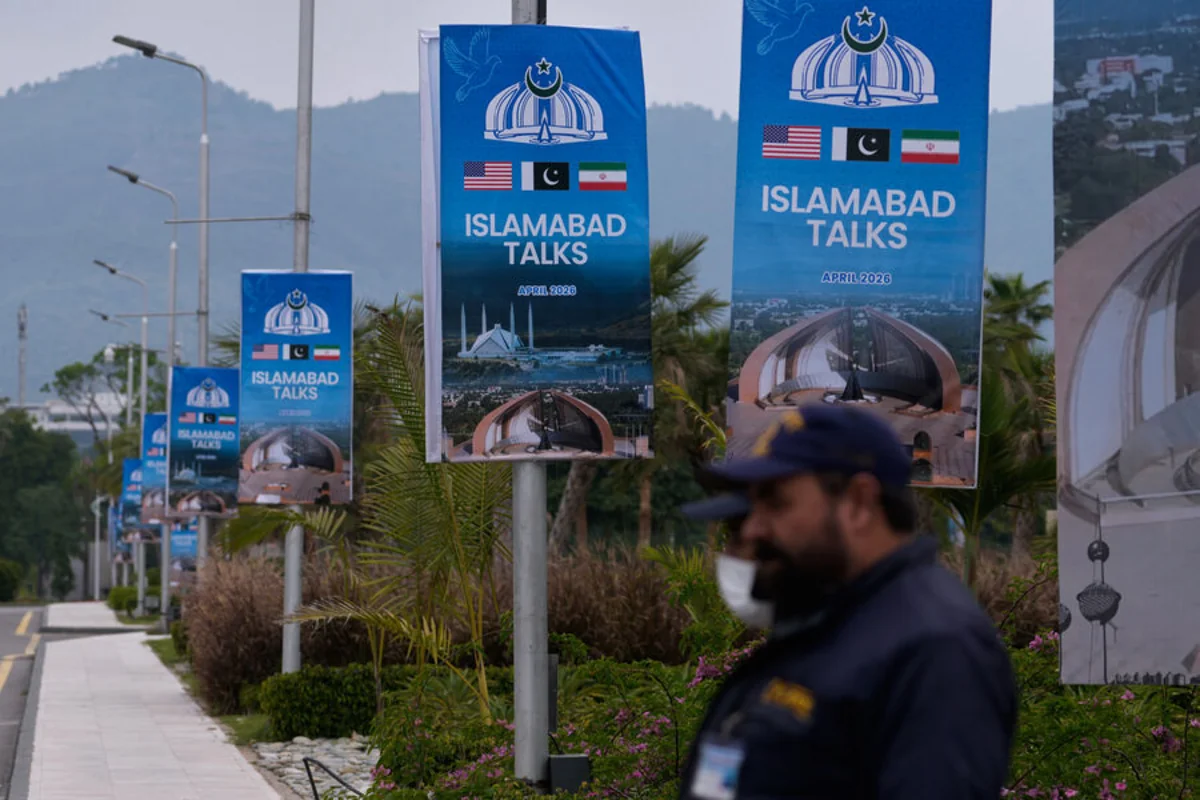
April 11–12, 2026: The Islamabad Talks
This was Pakistan’s defining moment. A 300-member US negotiating team led by Vice President JD Vance, alongside special envoys Steve Witkoff and Jared Kushner, flew into Islamabad. Iran’s 70-member team was led by parliamentary speaker Mohammad Bagher Ghalibaf and Foreign Minister Abbas Araghchi.
Pakistan’s mediating team — PM Shehbaz Sharif, Field Marshal Asim Munir, and Deputy PM Ishaq Dar — facilitated three rounds of talks over 21 hours.
The talks ultimately failed to produce a final deal. The core sticking point: Iran’s nuclear programme. Vice President Vance declared: “We need to see an affirmative commitment that they will not seek a nuclear weapon.” Iran refused to fully concede on this point.
Despite the breakdown, the talks were historic — the first direct US-Iran engagement since the Obama-era 2015 nuclear deal.
Late April–May 2026: Ongoing Negotiations
Pakistan refused to give up. Senior Pakistani officials intensified efforts, remaining in direct contact with both Washington and Tehran. The engagement became known as the “Islamabad Process” — framed as an ongoing diplomatic track rather than a one-time event.
Field Marshal Asim Munir personally travelled to Tehran on April 16, meeting Iranian leaders including President Masoud Pezeshkian and IRGC commanders — an extraordinary diplomatic mission by a military chief.
By May 7, the US and Iran — through Pakistani mediators — were working on a 14-point memorandum covering parameters for ending the war, including a potential moratorium on nuclear enrichment.
What’s at Stake: The Key Issues
The Strait of Hormuz
Iran’s blockade of the Strait of Hormuz — through which roughly 20% of the world’s traded oil passes — is the most immediate economic issue. The UAE, Saudi Arabia, and global shipping interests are all pressing for unconditional reopening. Iran wants the blockade issue resolved before addressing nuclear matters. The US initially demanded Hormuz access as a precondition; Washington has since softened this stance.
Iran’s Nuclear Programme
This remains the central obstacle. The US demands Iran commit to never developing a nuclear weapon and surrender its enriched uranium stockpile. Iran insists on its right to peaceful nuclear enrichment and has rejected what it calls “maximalist demands.” As of mid-May 2026, Trump has set five preconditions for resuming nuclear talks — including the delivery of 400kg of enriched uranium to the US.
Sanctions Relief
Iran is seeking the unfreezing of billions in assets and the lifting of US sanctions. The US has signalled willingness to ease economic pressure but only in exchange for verifiable Iranian concessions on nuclear and missile programmes.
The Pakistan-UAE Angle: A Complicating Factor
Pakistan’s mediating role has come with complications. Relations between Islamabad and Abu Dhabi have deteriorated significantly in 2026, adding a diplomatic dimension that affects Pakistan’s regional standing.
The UAE — which has long been a financial lifeline for Pakistan — grew frustrated over what it saw as Pakistani sympathy toward Iran during the conflict. Pakistan’s decision to open six land routes to Iran while Gulf Arab states faced an Iranian blockade particularly angered Abu Dhabi.
The UAE asked Pakistan to repay a USD 3.5 billion loan (which Islamabad managed with Saudi support), and Emirati authorities deported nearly 15,000 Pakistani nationals. For millions of Pakistani workers in the UAE, this diplomatic strain carries serious personal consequences.
Pakistan finds itself walking a tightrope — maintaining Gulf Arab trust while serving as Iran’s communication channel to the West.
What Comes Next?
As of May 19, 2026, the situation remains fluid:
- Trump has paused US military operations around the Strait of Hormuz, citing progress in negotiations requested by Pakistan, Saudi Arabia, and Qatar
- Iran submitted a new proposal via Pakistani mediators, suggesting the Hormuz and ceasefire issues be resolved first, with nuclear talks to follow separately
- The White House has received the proposal but has not publicly committed to exploring it
- Pakistan remains the primary channel of communication between both sides
The Council on Foreign Relations has described Pakistan’s role as “indispensable” — a remarkable turnaround for a country that was widely seen as a failed state just years ago.
Why This Matters for Pakistan’s Future
Pakistan’s emergence as a global mediator carries significant long-term implications:
- International credibility — Successfully brokering or contributing to a US-Iran deal would cement Pakistan’s standing as a legitimate diplomatic power
- Economic leverage — A stronger international profile helps Pakistan in IMF negotiations, debt restructuring, and attracting foreign investment
- Regional influence — The “Islamabad Process” positions Pakistan as a permanent fixture in Middle East diplomacy, not just a one-time intermediary
- Risk of failure — If talks collapse entirely, Pakistan risks being blamed by one or both sides, damaging relationships it cannot afford to lose
Conclusion
The story of Pakistan’s 2026 diplomatic emergence is one of the most unexpected geopolitical developments in recent memory. From delivering secret proposals in unmarked envelopes to hosting history’s first direct US-Iran talks in decades, Pakistan has punched well above its weight.
For more international news, analysis, and updates, visit TheArticlesForest.com
